
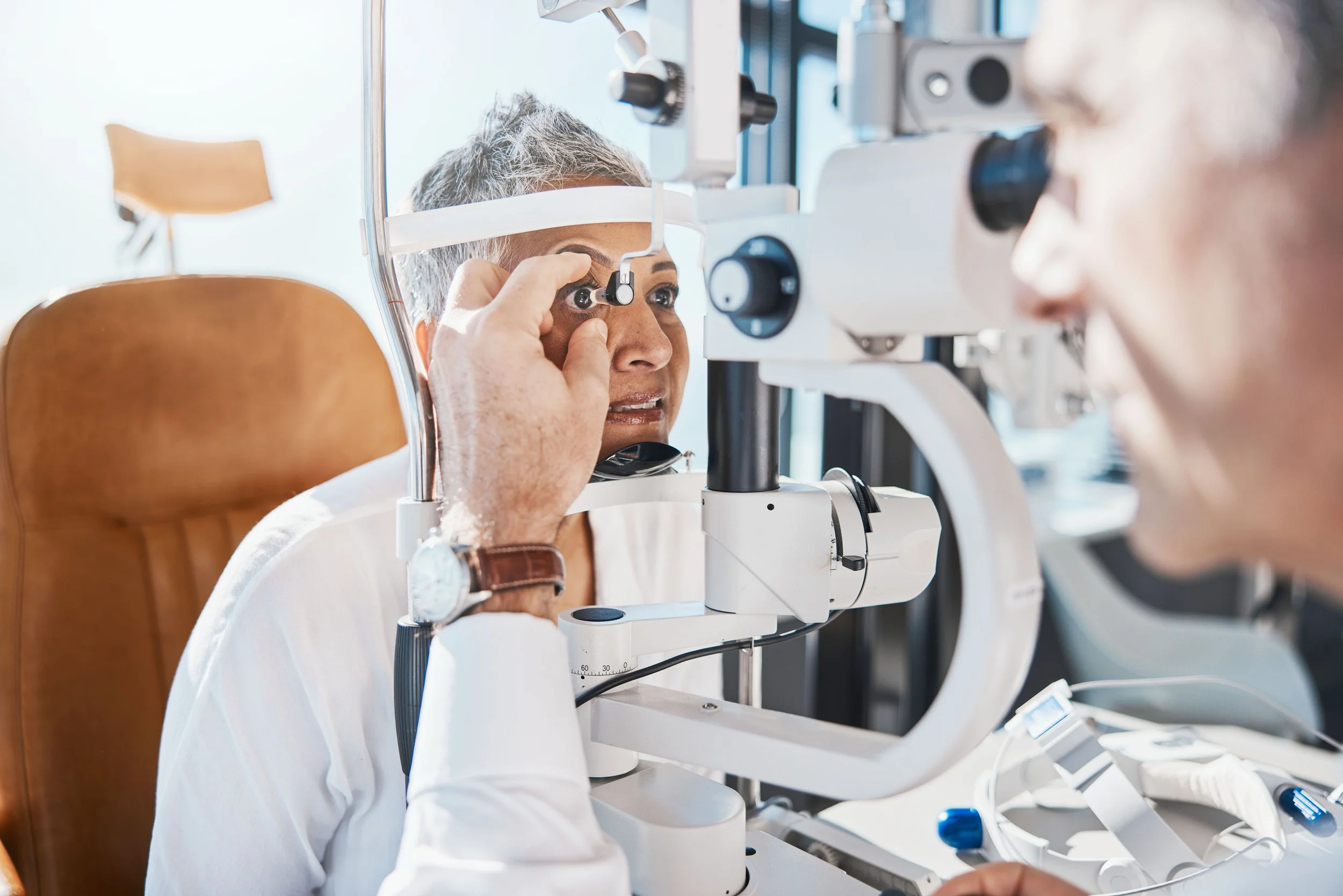
What is Glaucoma?
Glaucoma is a condition that harms the optic nerve, which is responsible for transmitting visual signals from the eye to the brain. This nerve contains roughly a million fibers, each acting like an electrical wire to relay information. In glaucoma, these fibers are gradually lost, making it the world's second most common cause of blindness. The disease progresses slowly and painlessly, and most people do not notice symptoms until vision loss is significant and irreversible. However, early detection through regular dilated eye exams and intraocular pressure measurements allows for timely treatment that can help preserve vision.
Symptoms
Often asymptomatic
Severe eye pain
Redness of the eye
Halos around lights
Risk Factors
People over the age of 60
Steroid medications
Have high eye pressure
Previous eye injury
Treatments
Vision loss from glaucoma cannot be undone, so finding and treating the disease early is key to keeping your sight. Although treatments cannot bring back lost vision, they can slow or stop further damage if started early and followed closely. Today, patients can choose from many proven treatments, including eye drops, oral medication, laser therapy, and minimally invasive surgeries. All of these aim to lower eye pressure and protect the optic nerve. The best treatment depends on the type and stage of glaucoma, your eye pressure, how you respond to medications, and your overall eye health. Often, a mix of treatments is used to keep the disease under control over time.
Eye Drops
In our clinic, we often manage glaucoma using medicated eye drops. Many cases respond well to a single drop, though more advanced glaucoma may call for a combination of drops. These medications either reduce the production of fluid within the eye or enhance its drainage. Possible side effects include:
Stinging or burning
Red eyes or redness of the skin around the eyes
Dry mouth
Blurred vision
Change in eye color and skin color around the eye
Longer eyelash growth
Laser Iridotomy
Laser Iridotomy is a procedure that helps fluid move more easily inside the eye and lowers eye pressure. In this treatment, a laser makes a small opening in the iris, which lets fluid flow better and helps the iris return to its normal position. This restores the eye’s natural fluid balance.
The procedure is quick and usually takes just a few minutes. To keep you comfortable, numbing drops are used on your eye, and sometimes medicine is given to make your pupil smaller. A special contact lens helps guide the laser. Most people feel little discomfort, though you might notice a brief sting during the treatment. Afterward, your vision may be blurry for a few hours, so it’s a good idea to have someone drive you home. Your doctor may also suggest using anti-inflammatory eye drops for a few days to help with healing.
Microinvasive glaucoma Surgery(migs)
Minimally invasive glaucoma surgery (MIGS) encompasses a range of modern surgical techniques that treat glaucoma using less invasive methods than traditional procedures. These surgeries offer a much safer profile, with fewer complications and quicker recovery times. The primary aim, as with all glaucoma therapies, is to lower intraocular pressure (IOP) and relieve stress on the optic nerve. In the past, surgery was typically considered only for patients with advanced disease or those not responding to medications.
MIGS procedures utilize tiny devices that are inserted through a small, clear incision in the cornea from within the eye. This approach minimizes disruption to eye tissues, reduces risks, and promotes a speedier recovery compared to older surgical options like trabeculectomy or glaucoma drainage implants.